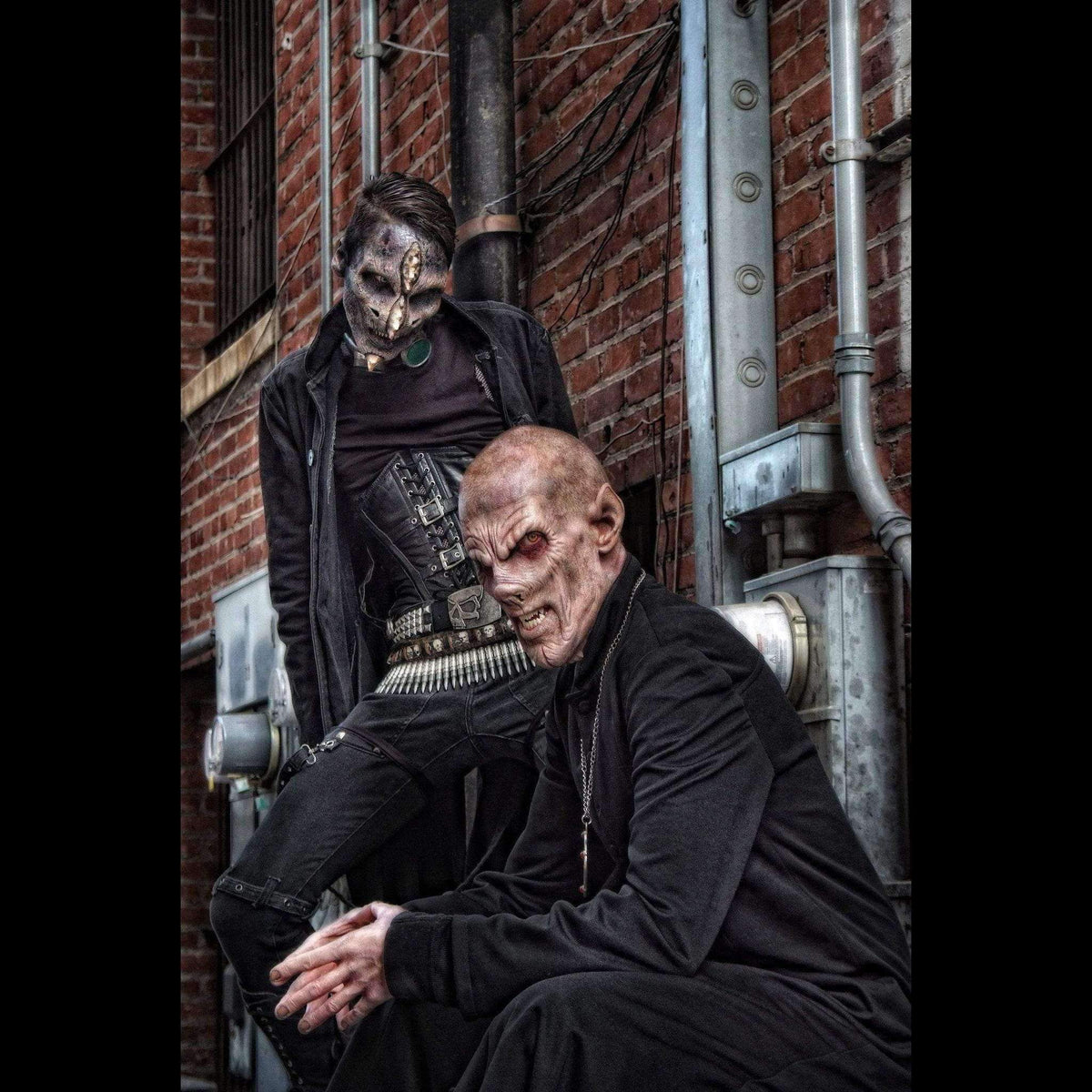
Best Alien Rubber Mask Alternatives
Share
If you have ever worn a full alien mask for more than twenty minutes, you already know the problem. The look might work from across the room, but up close it can feel stiff, hot, and disconnected from your performance. That is exactly why so many creators start looking for an alien prosthetic mask alternative once they want something more convincing than a novelty costume and more wearable than a rigid pull-over head.
For horror fans, cosplayers, haunt actors, filmmakers, and serious Halloween builders, the goal is not just to look alien. The goal is to become the character. You want the brow to move when you glare. You want the cheeks to shift when you sneer. You want a face that reads on camera, under stage lights, and from six feet away in a convention hallway. A good alternative should not fight your performance. It should amplify it.
What makes an alien prosthetic appliance better?
The biggest difference is movement. A traditional full mask sits on top of you. A well-made prosthetic appliance becomes part of your face. When the material is designed to flex with your expressions, the transformation stops looking like a costume and starts reading like a creature build.
That matters more than people think. Alien designs live or die on detail - strange bone structure, stretched skin, sculpted ridges, unusual ears, or a forehead that instantly changes your silhouette. A generic vinyl or latex mask can suggest the idea, but it often flattens those details into one static shape. Prosthetic pieces let you place those features exactly where they matter most.
Comfort is another reason people switch. Full masks trap heat, limit visibility, and can muffle your voice. If you are working a haunt shift, shooting a scene, or spending a full day at a con, those issues stop being minor pretty fast. An appliance-based build leaves more of your head open, which usually means better airflow, easier talking, and less fatigue over time.
The most effective alien prosthetic mask alternative
For most character builders, the strongest alien prosthetic mask alternative is a prosthetic appliance setup built from foam latex or a similar performance-friendly FX material. Instead of covering your entire head with one piece, you build the transformation around the face and supporting details.
That can mean an alien forehead, cheek pieces, a nose transformation, pointed or elongated ears, a chin appliance, or layered creature textures. The result feels more cinematic because it is more selective. You are changing the features the audience notices first rather than hiding your whole head under a shell.
Foam latex is especially appealing when expression matters. It is lightweight, flexible, and capable of carrying sculpted detail without turning your face into a statue. For performers and filmmakers, that balance is gold. You still get dramatic structure, but your face can act underneath it.
This is where the gap between costume retail and effects work really shows. If all you need is a quick silhouette for one party, a basic mask might get the job done. If you want an alien that looks alive, appliances usually win.
Why appliances read better on camera and in person
Cameras are merciless. So are convention hall lights and haunted attraction queue lines. Anything shiny, thick, or ill-fitting starts to look fake fast. A prosthetic build has the advantage of blending into your skin, especially when the edges are applied and painted well.
That blend is what sells the illusion. The audience should not see where the alien begins and you end. They should just believe the shape of the character. With a full mask, the edge is the whole thing. With prosthetics, the edge can disappear.
There is also a performance advantage. Your mouth remains more visible and usable. Your eyes are not buried behind oversized openings. If your alien speaks, snarls, hisses, or emotes, that mobility makes a real difference.
When a full mask still makes sense
Not every build needs prosthetic-level nuance. There are times when a mask still earns its place. If you need the fastest possible transformation, if your event is short, or if your character requires a fully enclosed head shape that would be difficult to build with separate pieces, a mask can still be the practical call.
Budget can also be part of the decision. A single mask may feel simpler because it looks like one purchase and one step. But that depends on your expectations. If you end up replacing it because it photographs poorly or becomes uncomfortable halfway through the event, it stops being the easy option.
The better question is not whether masks are bad. It is whether they match the result you want. If your priority is realism, expression, and a more professional finish, the alternative usually offers more creative control.
Building a stronger alien look without a full mask
A good alien transformation rarely depends on one hero piece alone. The most convincing builds stack details in smart places. Start with the facial change that does the heaviest lifting. That might be a brow appliance that changes your skull shape or a set of pointed ears that instantly pushes the design out of human territory.
From there, think about texture and finish. Skin tone matters. So does surface variation. An alien face painted in one flat color can look unfinished, even if the sculpt is excellent. Shadows in the temples, mottling on the cheeks, subtle vein work, or a different tone around the eyes can take the same appliance from costume-shop to screen-creature.
Teeth also matter more than people expect. If your face says extraterrestrial terror but your smile says regular Tuesday, the illusion takes a hit. A set of character teeth can tie the whole thing together without requiring a full headpiece.
Wigs, hoods, or costuming around the neck and collar line can help bridge the rest of the transformation. This is one reason prosthetic builds feel so flexible. You are not locked into one all-or-nothing shape. You can control exactly how far the creature goes.
The trade-off: skill versus flexibility
There is one honest drawback to choosing an alien prosthetic mask alternative. It usually asks a little more from you. Application takes time. Paint takes planning. Fit and blending improve with practice.
But that extra effort buys flexibility. You can make the alien cleaner, uglier, slicker, meaner, more humanoid, or more monstrous depending on your event. You can also repair, repaint, and adapt parts of the look instead of replacing a whole mask because one area failed.
For many enthusiasts, that is not a downside at all. It is the fun part. Transformation is a craft. The more control you have, the more personal the final character becomes.
Choosing the right alien prosthetic mask alternative for your event
The right build depends on where the alien is going to live. A haunt performer needs durability, breathability, and something that can survive repeated wear. A filmmaker may care most about close-up realism and how the appliance reacts under lighting. A cosplayer often needs a balance of comfort, visual impact, and enough mobility to make it through a long convention day.
If your event includes heat, crowds, or extended wear, lightweight appliances usually make more sense than a heavy enclosed mask. If your character needs a dramatic profile for photos, focus on forehead, cheek, and ear changes first. If you will be speaking or performing, prioritize pieces that leave your mouth and jaw movement working for you instead of against you.
This is where a specialty FX brand makes a difference. A company like The Scream Team understands that customers are not just buying a face piece. They are building a creature that has to work in motion, under pressure, and often for hours at a time.
Alien prosthetic mask alternative ideas that actually work
Not every alien has to be a giant-headed gray. Some of the best creature builds come from mixing recognizable human features with one or two aggressive design choices. A pronounced brow with stretched skin texture can feel eerie and intelligent. Sharp ears and a contoured nose can push the design toward predatory. Add teeth and color contrast, and suddenly the character has a point of view.
That is the real power of going beyond a full mask. You are not stuck with a factory-made face. You are shaping a performance piece. The alien can be elegant, feral, biomechanical, ancient, or pure nightmare fuel depending on how you finish it.
And because prosthetic builds can move with you, they tend to create stronger reactions. People lean in. They do a second take. They stop seeing costume components and start seeing a living character standing in front of them.
If your current mask gets the job done but never quite gets the response you want, that is your cue. The next level is usually not more plastic, more bulk, or more coverage. It is better movement, better blending, and a face that feels alive. When the character starts breathing through your expressions instead of sitting on top of them, the transformation finally lands.