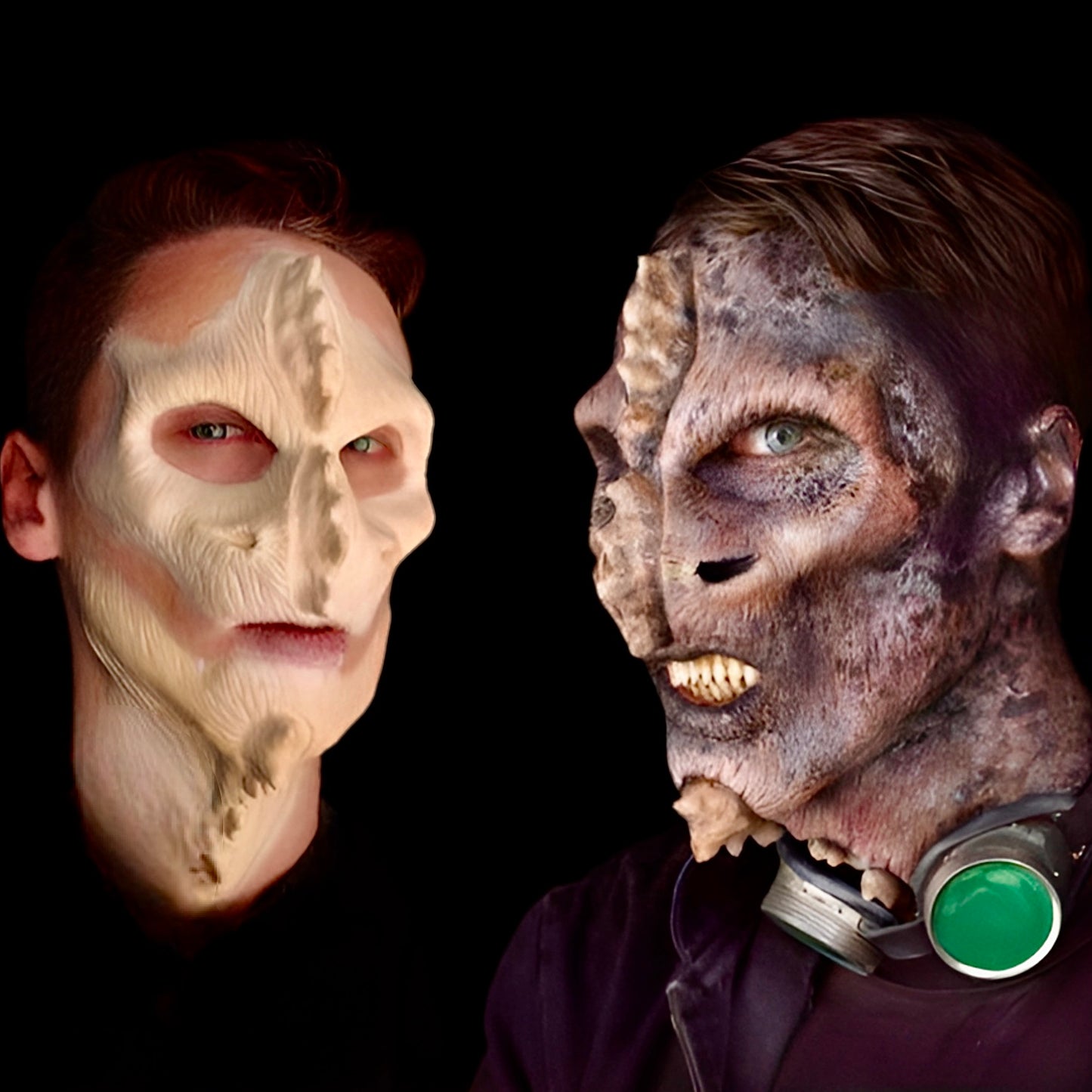
How to Apply Foam Latex Prosthetics Right
 The difference between a killer creature build and a mask-like mess usually comes down to application. If you want to know how to apply foam latex prosthetics so they move with your face, hold through a long night, and actually sell the character, the process matters just as much as the sculpt.
Foam latex has a look and feel that horror fans, performers, and FX artists love for a reason. It is lightweight, flexible, and expressive. When it is applied well, it does not just sit on the skin. It becomes part of the performance. That is the whole magic - your grin, snarl, and dead-eyed stare still read on camera, on stage, or under convention lights.
Why foam latex behaves differently
Before you start gluing anything down, it helps to understand the material. Foam latex is soft and porous, which gives it that natural movement and skin-like texture. It also means it can absorb product differently than silicone or gelatin. If you use too much adhesive, too much moisture, or rush your paint, the piece can fight you.
That is why clean prep and controlled layering matter. Foam latex rewards patience. The good news is that once you get the rhythm, the process is very repeatable.
What you need before you start
A strong application setup is not about having a giant makeup trailer. It is about having the right essentials within reach. At minimum, you want your foam latex prosthetic, adhesive compatible with skin and prosthetics, remover, scissors, cotton swabs, a sponge or stipple sponge, translucent powder if needed, and your paints or makeup for finishing.
You will also want a mirror with good lighting, a clean work surface, and enough time. Rushing prosthetics is where edges lift, paint streaks, and alignment goes sideways. If this is for a haunt shift, a shoot, or a major con day, do a test run before the real event.
Skin prep comes first
If you skip prep, you are asking the adhesive to work harder than it should. Start with clean skin. Remove oil, sweat, sunscreen, and leftover makeup. If the wearer has facial hair where the appliance needs to sit, that area usually needs to be shaved or closely trimmed. Foam latex can conform beautifully, but not over stubble that keeps the adhesive from making contact.
Let the skin dry fully before you move on. If you are working on a performer who sweats heavily, especially in a haunted house or under hot lights, a light skin prep product can help. Just make sure anything you use is compatible with your adhesive.
Dry fit the piece before glue
This is the part beginners try to skip, and it always costs them time later. Place the prosthetic on the face without adhesive and study the fit. Check where the eyes, nostrils, mouth, brows, or cheek contours land. Foam latex appliances are designed to move naturally, but every face is different.
If trimming is needed, do it carefully and conservatively. Small adjustments around the edges can improve the fit, but cutting too much can ruin the blend line or distort the sculpt. Always trim a little, then check again.
How to apply foam latex prosthetics step by step
Once the piece is fitted, start with a plan for placement. Usually, it is best to anchor the center first and work outward. That keeps the sculpt aligned with the natural landmarks of the face instead of drifting as you go.
Apply a thin layer of adhesive to the skin and, if your adhesive calls for it, a thin layer to the back edge of the prosthetic. Let it become tacky rather than soaking wet. This part depends on the adhesive you are using, so follow the product directions. Different adhesives have different wait times, and that matters.
Press the center of the appliance into place first. Then guide the rest down gradually, smoothing outward with your fingers, a cotton swab, or a sponge. Do not mash the foam flat. You want contact and control, not compression. Around expressive zones like the mouth and eyes, pay extra attention to symmetry and tension. A piece that is slightly off at the cheek can look fine. A piece that is off around the mouth will look wrong every time the actor talks.
Once the main body is set, go back to the edges. Lift any area that did not catch cleanly, add a little more adhesive, let it tack, and press it down again. This is where patience pays off. Clean, thin edges are what make the prosthetic disappear into the makeup.
Blending the edges without wrecking the piece
Blending foam latex edges is less about brute force and more about finesse. If the appliance has feathered edges, your job is to secure them smoothly and avoid flooding them with adhesive or paint. Too much product builds a ridge, and that ridge catches light.
Some artists use additional blending materials depending on the look they are after, but for many ready-to-wear foam latex pieces, careful adhesive work and paint are enough to sell the transition. Tap, press, and refine in small movements. Do not drag hard across the edge or you can roll it up.
If you notice texture differences between skin and prosthetic, that can usually be handled in the paint stage with stippling. Texture is your friend in horror and creature work. Real skin is not perfectly smooth, and neither is anything undead, demonic, or monstrous.
Painting foam latex so it looks alive - or convincingly dead
This is where the transformation really starts to breathe. Foam latex usually needs color work to fully integrate with the skin and complete the character. A base tone gets you started, but dimension is what makes the appliance feel believable.
Work in thin layers. Whether you are using rubber mask grease paint, cream makeup, or another prosthetic-friendly color system, avoid caking product into the pores. Build color gradually and match not just the skin tone, but the undertones around the surrounding area. Human skin has reds, blues, yellows, and uneven patches. So do creatures, only pushed further.
For monsters, clowns, zombies, demons, and beasts, the best results usually come from more than one shade. Shadow under protruding forms, highlight raised areas, and tie the piece into the neck, ears, chest, or hands if they will be visible. Nothing breaks the illusion faster than a film-quality face appliance sitting above an untouched jawline.
Set the look for wear and movement
Once painted, check the prosthetic under the kind of lighting where it will actually be seen. Convention hall lighting is not film lighting. Stage wash is not porch light. Haunted attraction darkness is its own beast. You may need stronger contrast than you think.
Ask the wearer to talk, smile, frown, and turn their head. Watch for edge lift, cracking makeup, or areas where the color separates. It is much easier to fix that now than after you are already in costume. If powder is appropriate for your makeup system, use it lightly. Too much can flatten the life out of the paint job.
Common mistakes when learning how to apply foam latex prosthetics
The most common mistake is using too much adhesive too fast. More glue does not create a better hold. It usually creates slipping, mess, and thick edges. The second mistake is ignoring fit. Even a beautifully painted appliance will look off if it was placed crooked or stretched unnaturally during application.
Another issue is stopping the character at the appliance line. Prosthetics are part of a full transformation, not the entire job. Hair, teeth, ears, horns, contact-safe detailing around the eyes, costume, and paint on exposed skin all work together. That is where a complete character build goes from good to unforgettable.
Removal matters as much as application
At the end of the night, do not rip the prosthetic off and call it a victory. Use the proper remover for the adhesive you applied and work slowly. Loosen the edges first, then continue gently until the piece releases. This protects both the skin and the appliance.
Foam latex prosthetics can often be reused if they were applied and removed carefully, then cleaned and stored properly. That makes careful handling worth it, especially for performers and enthusiasts building a recurring character.
A final note on getting a better result every time
The best foam latex applications do not look like someone glued a prop to their face. They look like the character was always there, waiting to come out. Give yourself time, test your fit, respect the material, and build the whole look around the appliance. That is when the transformation stops being makeup and starts becoming performance.